
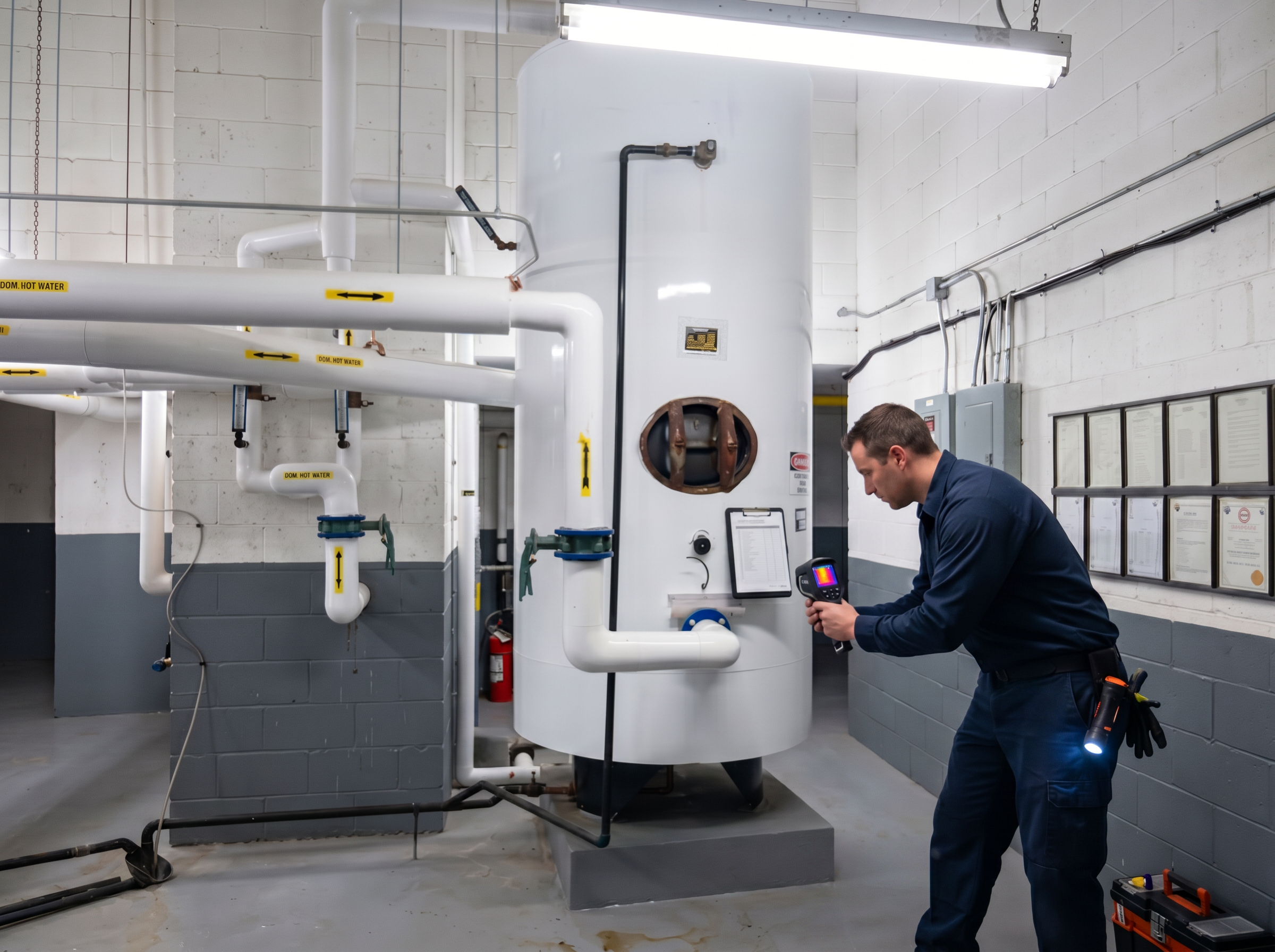
The challenge for property managers is that much of this deterioration happens inside the tank, where it is not visible during a routine walk-through of the mechanical room.
Most domestic hot water tanks are protected by an interior lining and sacrificial anodes. Over time, anodes deplete, sediment builds up, fittings corrode, and the lining can crack, wear, or separate from the steel tank body. Once the steel is exposed to water, corrosion can accelerate quickly.
Domestic hot water tanks fail from the inside out.
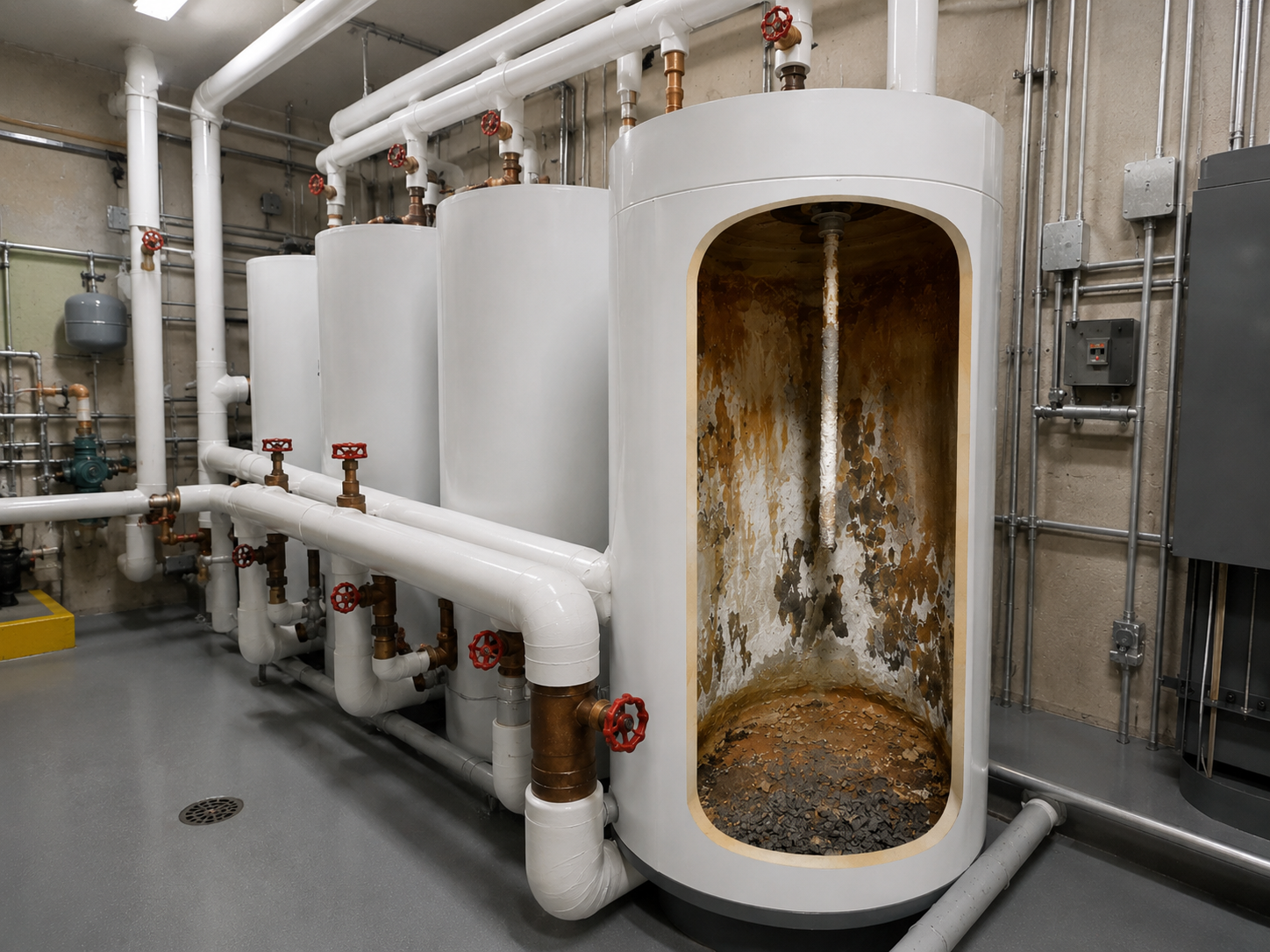
A tank can look fine from the outside and still be deteriorating inside.
Exterior condition only tells part of the story. A tank may have no active leak and still have depleted anodes, sediment buildup, lining deterioration, or corrosion beginning inside the vessel.
By the time rust staining, leaking fittings, or hot water complaints appear, the problem may already be more expensive to correct.
4 common failure points.
The common issues Hydrastone looks for:
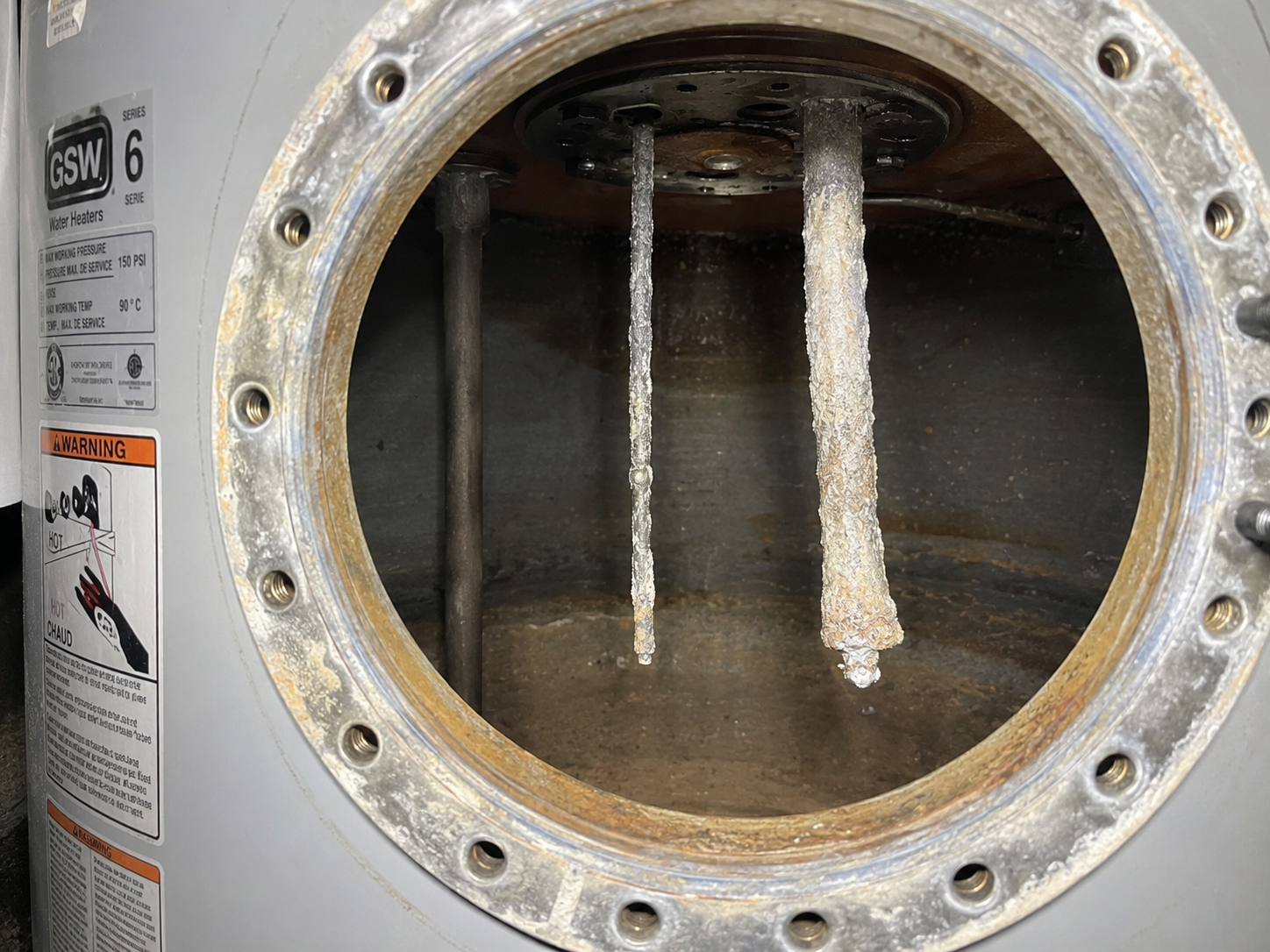
Sacrificial anodes are rods inside the tank that absorb corrosion, protecting the steel shell. Once they wear out, the tank itself becomes the target.
Depleting anodes
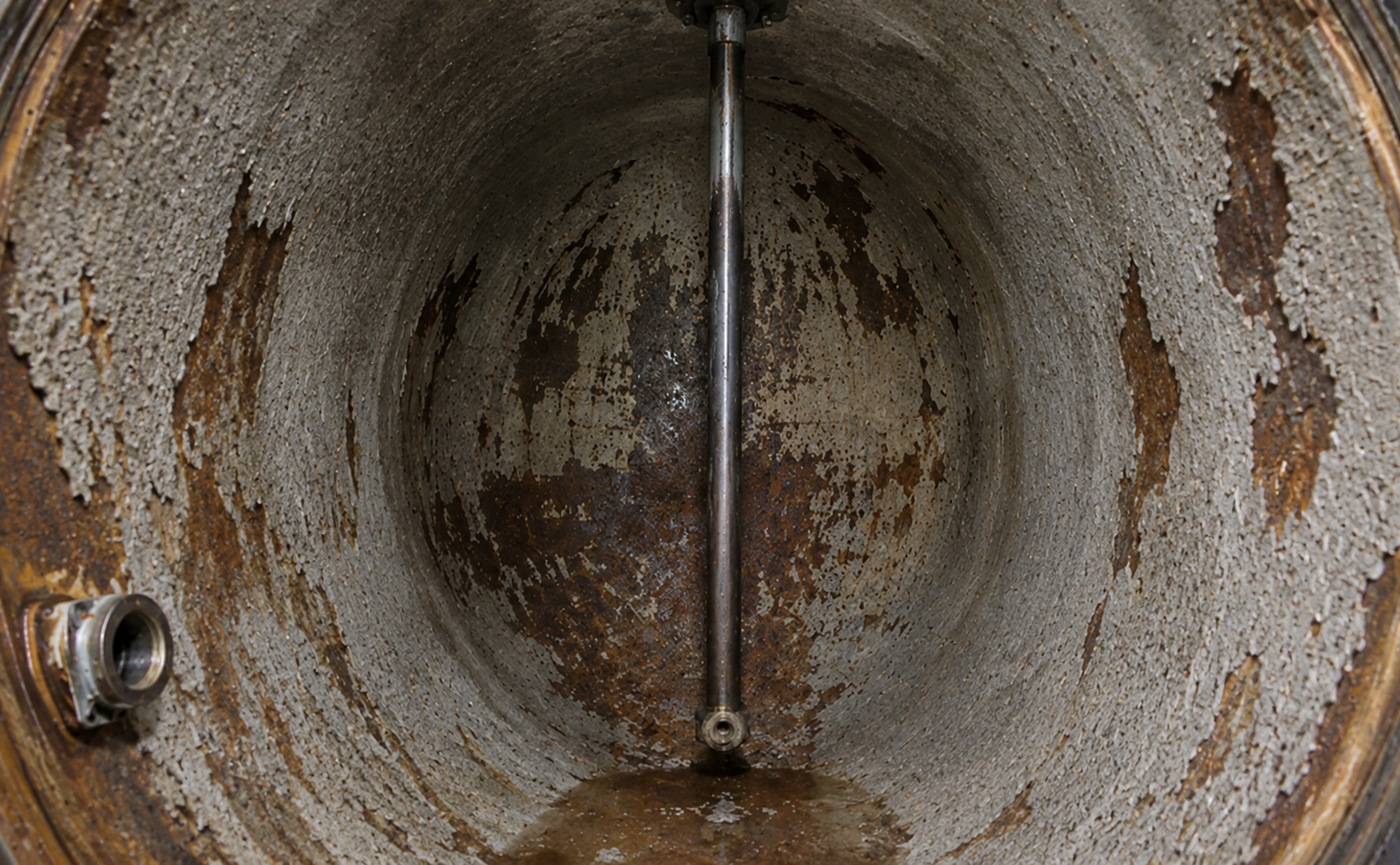
The interior lining protects the steel tank from corrosion. When the lining begins to deteriorate, lift, flake or separate from the tank walls, the tank will begin to deteriorate.
Lining deterioration

Mineral buildup and sediment can collect inside the tank, reduce efficiency, and contribute to deterioration over time.
Sediment calcification

Fittings, couplings, and connections often show the first visible signs of deterioration. Small leaks can cause mechanical room damage and point to broader issues.
Corroded fittings
Different tanks need different preventative maintenance —
but all tanks need attention.
Small domestic hot water tanks
Smaller glass-lined tanks usually do not have a manway, which means Hydrastone cannot enter the tank or inspect and repair the interior lining in the same way. However, these tanks still have important serviceable components. Anodes, fittings, couplings, drains, relief valves, insulation, and exterior corrosion points can all be inspected and maintained. In many buildings, those smaller tanks are ignored until they leak or fail, even though basic maintenance can identify problems earlier and reduce the risk of emergency replacement.
For smaller glass-lined tanks, maintenance may include:
-
External inspections are vital to ensure there are no visible leaks and to obtain model numbers, and tank data to create a custom maintenance program.
-
Anodes deplete and should be replaced on a scheduled program to protect the tank and internal fittings from corrosion. They are an important part crucial in extending the life of these tanks and are often overlooked.
-
The most common areas for premature tank failure are leaking fittings and connections actually corroding the tank from the exterior. Periodic inspections help eliminate this common issue.
-
A thorough investigation of the tank and all components to ensure any deficiencies are repaired quickly to prevent unnecessary failures.
-
Flushing out the sediment helps improve efficiency and longevity of your equipment.
-
Regular inspection and timely replacement of corroded T&P valves ensures the relief system operates correctly and safely. A properly functioning T&P valve is a critical safety device.
-
Hydrastone will submit a report including tank photos, and will outline deficiencies, and future recommendations for servicing.
Large domestic hot water tanks
Large commercial domestic hot water tanks often have a manway, which allows Hydrastone technicians to open the tank, enter it safely, inspect the interior lining, clean the tank, patch damaged areas, and reline the tank when appropriate. This gives property managers a much clearer picture of the tank’s internal condition and creates opportunities to extend the tank’s service life before replacement is required.
For large manway tanks, maintenance may include:
-
External evaluations will be completed to ensure tank fittings, tank insulation, T & P valves are all in good working condition.
-
A full interior inspection to determine the lining condition, condition of the couplings, and fittings, condition of the tank substrate, and manway collars.
-
Our AlKrete tank lining material is easily and quickly field applied, depending on the condition of the existing lining we may recommend some minor patching or full lining replacement.
-
Anodes protect the unlined areas inside your tank, these anodes are sacrificial and deplete over time, our internal data suggests these anodes should be replaced in general every 2 years, however water conditions do play a role in the depletion rate and recommended schedule.
-
Everytime the man-way cover is removed form a tank you must replace the gasket – Hydrastone manufactures our own gaskets designed specifically for hot water tank applications.
-
Sediment builds up over time inside your hot water tank. Excessive sediment can affect the efficiency of your hot water tank and should be removed as part of a scheduled maintenance program.
-
Our typical service includes an inspection of all tank fittings, couplings, drains and relief valves. We will note any deficiencies on our report along with solutions if required.
-
For older tanks that have not been properly maintained, weld repairs may be required to replace a corroded coupling, repair a leaking tank, or replace a corroded heater collar.
-
After every service completed by Hydrastone, a comprehensive inspection report is completed which lists tank and lining condition, depletion rate of your anodes, and lists any deficiencies if found. Recommendations for future servicing requirements is also part of the report.
Relining restores the protective barrier we helped create.
Many domestic hot water tanks are manufactured with a protective interior lining designed to separate water from the steel tank body. Over time, that lining can deteriorate, leaving the tank vulnerable to corrosion.
Hydrastone manufactures Alkrete, the cement lining used by Canadian tank manufacturers to protect domestic hot water tanks before they leave the factory. When that original lining begins to fail, our team can prepare the interior and apply a new Alkrete lining on site — using the same product knowledge, material expertise, and application standards behind the original factory lining.
If the tank is still structurally sound, relining can restore the internal protective barrier, extend the service life of the tank, and help the building avoid or defer a disruptive and expensive replacement.
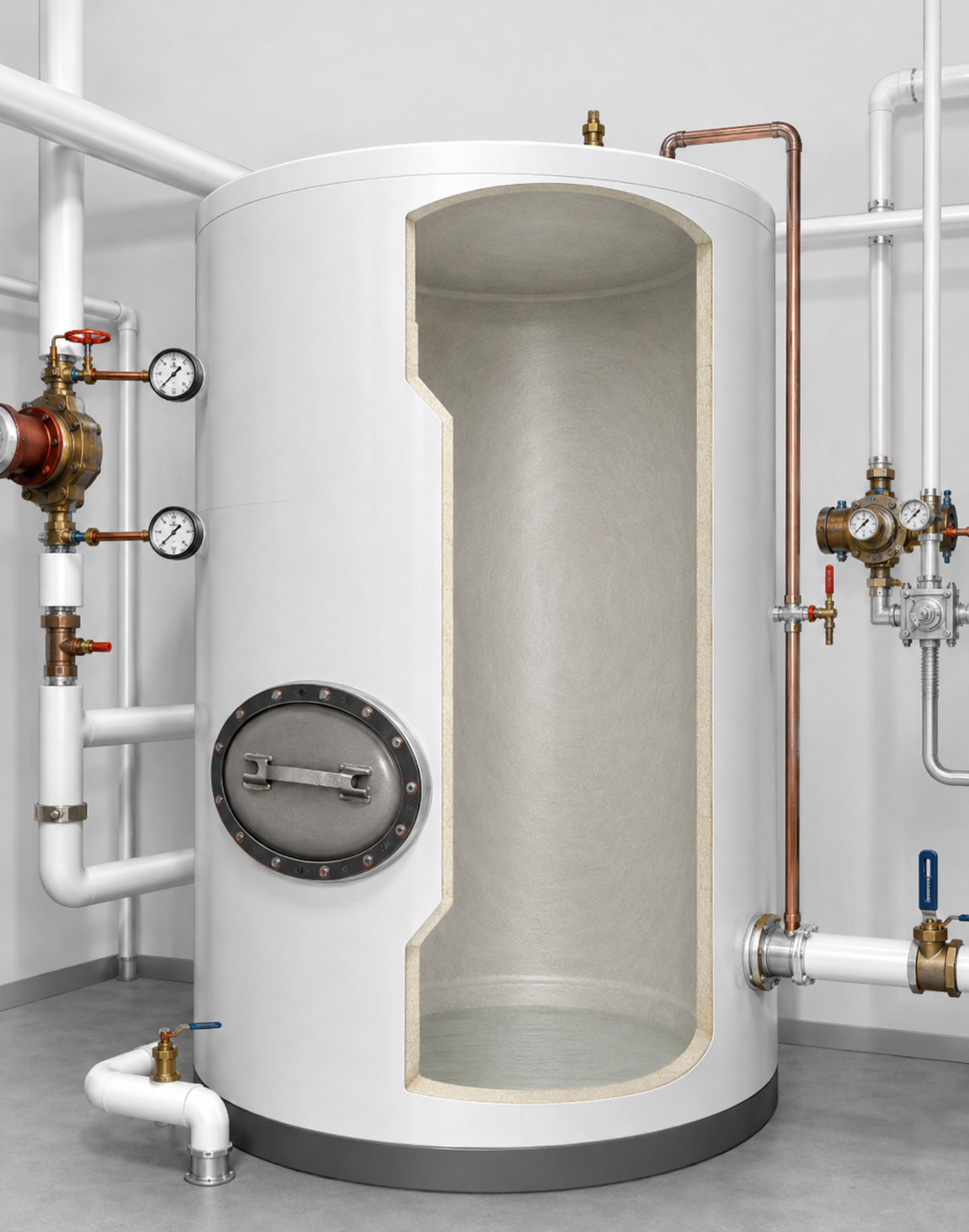
Factory condition
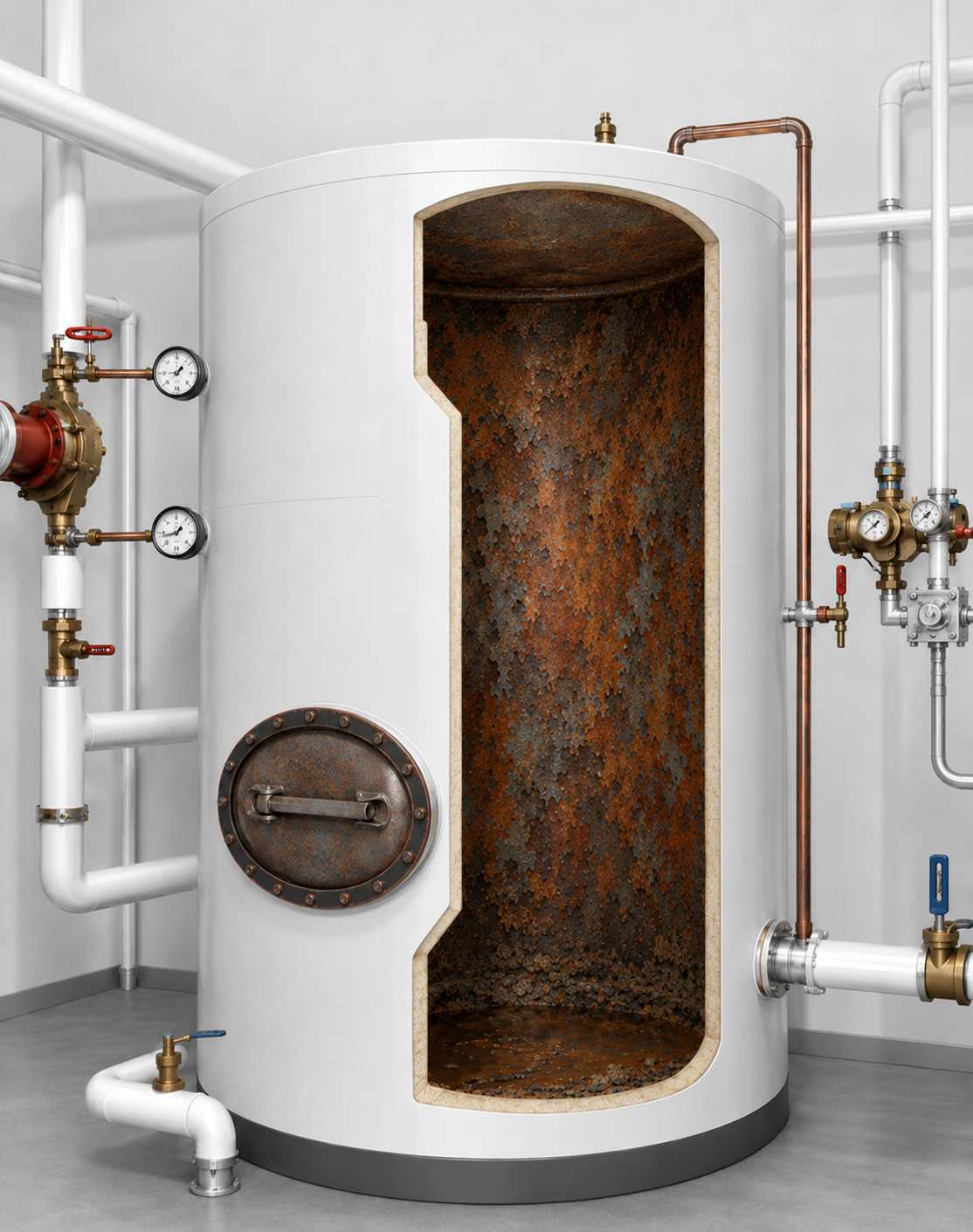
Corroded condition
Re-lined condition

Hydrastone is the expert partner property managers call when they want more life, fewer surprises, and better decisions from their domestic hot water tanks.
We manufacture the lining, apply it for leading Canadian tank manufacturers, inspect and maintain tanks and supporting components, troubleshoot performance issues, and reline structurally sound tanks when needed to restore their internal protective barrier as close as possible to factory condition.
Specialized tank expertise across your entire building portfolio.
Contact us.
Find out what condition your tanks are in before there is a leak.
Hydrastone can complete a free exterior inspection, identify visible signs of deterioration, and provide a written recommendation for maintenance, repair, relining, or replacement planning.
By submitting this form, you consent to Hydrastone contacting you by email or phone to respond to your inquiry, provide the information you requested, and send you future email communications about Hydrastone’s services, insights, and updates. You may withdraw your consent and unsubscribe from marketing emails at any time.